简体中文
Solar-powered lighting systems have become increasingly popular around the world due to their energy-saving advantages, environmental friendliness, and ease of installation. From garden pathway lights and landscape lamps to emergency outdoor lighting and decorative illumination, solar lights are now widely used in residential, commercial, and industrial environments.
At the core of every solar light system is an energy storage component — the rechargeable battery.
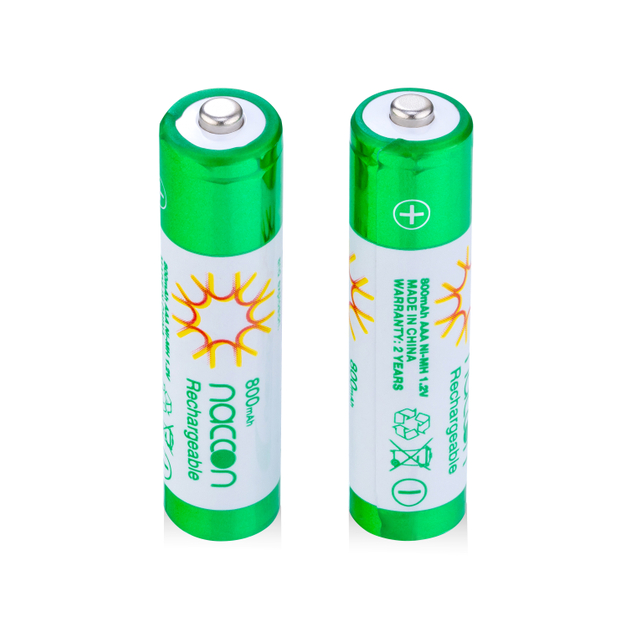
Among various rechargeable battery technologies, Nickel-Metal Hydride (NiMH) batteries have long been one of the most commonly used power solutions for solar lights, especially in small and medium-sized consumer products.
Although lithium-ion batteries have gained popularity in recent years, NiMH batteries still maintain important advantages in terms of:
Safety
Cost
Reliability
Temperature adaptability
Environmental friendliness
In this article, we will explore in detail:
What NiMH batteries are
Why they are used in solar lights
Their working principles
Advantages and disadvantages
Comparison with lithium batteries
Performance in different environments
Maintenance and lifespan
Future development trends
NiMH stands for:
It is a rechargeable battery chemistry developed as an improvement over older nickel-cadmium (NiCd) batteries.
A NiMH battery typically consists of:
Positive electrode: Nickel oxyhydroxide
Negative electrode: Hydrogen-absorbing alloy
Electrolyte: Potassium hydroxide solution
The nominal voltage of a single NiMH cell is:
Common NiMH battery sizes include:
AA
AAA
SC
C
D
For solar lights, the most commonly used formats are:
AA NiMH
AAA NiMH
Typical capacities:
AAA: 300–1000mAh
AA: 600–2800mAh
To understand the role of NiMH batteries, it is important to understand how solar lights operate.
A typical solar light system contains:
Solar panel
Rechargeable battery
LED light source
Charging/control circuit
Light sensor
The working process is relatively simple.
During the day:
The solar panel converts sunlight into electricity.
Electricity charges the rechargeable battery.
The LED remains off.
At night:
The light sensor detects darkness.
The control circuit activates the LED.
The battery supplies stored energy to power the light.
This cycle repeats daily.
Therefore, the battery must withstand:
Frequent charging
Frequent discharging
Outdoor temperature changes
Long-term cycling
NiMH batteries are well suited for these conditions.
NiMH batteries became popular in solar lighting because they provide a balance between:
Performance
Safety
Cost
Environmental compatibility
Several key characteristics make them highly suitable for solar-powered lighting systems.
One of the biggest advantages of NiMH batteries is safety.
Compared with lithium-ion batteries, NiMH batteries are:
Less likely to overheat
More resistant to thermal runaway
Less sensitive to overcharging
More stable under abuse conditions
Solar lights are often installed:
Outdoors
Under direct sunlight
In high-temperature environments
Because of this, battery safety is extremely important.
NiMH batteries can tolerate:
Charging fluctuations
Heat exposure
Basic charging circuits
Better than many lithium systems.
This makes them ideal for:
Garden lights
Landscape lights
Public outdoor lighting
Outdoor solar lights experience changing temperatures throughout the year.
NiMH batteries generally perform well in:
Moderate heat
Cool weather
Variable climates
Compared to some lithium batteries, NiMH cells often maintain:
More stable charging behavior
Better cold-weather reliability
This is especially useful in:
Northern climates
Winter conditions
Seasonal outdoor installations
Solar lights charge and discharge every day.
That means:
More than 300 cycles per year
Battery cycle life becomes extremely important.
High-quality NiMH batteries can often achieve:
500–1000 charge cycles
Sometimes even more under proper conditions
This provides:
Long service life
Reduced maintenance costs
Better overall reliability
NiMH batteries are considered more environmentally friendly than older NiCd batteries.
Unlike NiCd batteries, NiMH cells:
Do not contain toxic cadmium
Have lower environmental impact
Are easier to recycle
As global environmental regulations become stricter, NiMH batteries became a preferred alternative in many solar lighting applications.
For small solar lights, cost is a major consideration.
NiMH batteries offer:
Reasonable manufacturing cost
Mature production technology
Wide market availability
For low-power solar lighting products:
NiMH remains highly economical
This is one reason many inexpensive garden lights still use:
AA NiMH batteries
AAA NiMH batteries
A single NiMH cell provides:
This voltage works well with:
Low-power LEDs
Small solar panels
Simple charging circuits
Many solar garden lights use:
One AA NiMH battery
One small solar panel
One LED
This simple design reduces:
Complexity
Cost
Failure rate
NiMH batteries are widely used in many solar lighting applications.
Perhaps the most common application.
Advantages:
Low power consumption
Daily charging cycle compatibility
Simple structure
Most garden lights use:
1×AA NiMH
1×AAA NiMH
Landscape lights often require:
Longer runtime
Higher brightness
They may use:
Multiple NiMH cells
Larger capacity packs
Examples include:
String lights
Decorative lanterns
Holiday lights
NiMH batteries work well because:
Power demand is relatively low
Safety requirements are high
Some emergency systems use NiMH batteries due to:
Reliability
Stable performance
Long cycle life
As lithium batteries become more common, many people ask:
The answer depends on the application.
NiMH batteries are generally safer in:
High temperatures
Outdoor conditions
Basic charging systems
NiMH batteries tolerate charging variations better.
This allows:
Lower-cost electronics
Simpler solar controllers
NiMH batteries handle:
Overcharging
Deep discharge
Temperature variation
More safely than many lithium batteries.
For low-power products:
NiMH can still be cheaper
Especially for:
Basic garden lights
Decorative lighting
Lithium batteries also offer major benefits.
Lithium batteries store:
More energy in smaller size
This enables:
Smaller designs
Longer runtime
Modern lithium batteries lose charge more slowly during storage.
Lithium batteries are usually lighter than NiMH batteries.
Lithium batteries provide:
3.2V
3.7V
This benefits higher-power systems.
Although NiMH batteries have many advantages, they also have limitations.
Traditional NiMH batteries lose charge relatively quickly during storage.
This means:
Energy may gradually disappear even when unused
Modern low-self-discharge NiMH batteries have improved this significantly.
Compared with lithium batteries:
NiMH stores less energy per unit weight
This limits runtime in compact designs.
Repeated deep discharge may shorten NiMH battery life.
Poor-quality solar lights sometimes:
Over-discharge batteries at night
Which accelerates degradation.
NiMH batteries are somewhat less energy-efficient during charging than lithium batteries.
Some energy becomes:
Heat during charging
This reduces overall efficiency slightly.
Not all NiMH batteries perform equally.
Low-quality batteries may suffer from:
Capacity exaggeration
Poor cycle life
High self-discharge
Leakage
Premature failure
High-quality cells provide:
Better runtime
Longer lifespan
Stable charging performance
For solar lights, battery quality greatly affects:
Brightness duration
Product lifespan
User satisfaction
Several environmental factors influence battery life.
Extreme heat accelerates aging.
Solar lights installed under intense sunlight may experience:
Faster capacity loss
Insufficient sunlight may result in:
Incomplete charging
This affects runtime.
Frequent deep discharge stresses the battery.
Outdoor environments may expose batteries to:
Humidity
Water
Corrosion
Proper sealing is important.
Modern LSD NiMH technology has greatly improved solar light performance.
Advantages include:
Lower self-discharge
Better storage stability
Longer standby performance
These batteries are ideal for:
Seasonal solar products
Intermittent-use lighting
To maximize lifespan:
Dust reduces charging efficiency.
Recharge lights regularly.
Old batteries affect charging performance.
Do not mix old and new cells.
Protect battery compartments from moisture.
Although lithium batteries are expanding rapidly, NiMH technology still remains important.
Future improvements may include:
Lower self-discharge
Better cycle life
Improved temperature resistance
Higher capacity
Faster charging
NiMH batteries may continue dominating:
Low-cost solar lights
Safe outdoor lighting
Consumer decorative products
Meanwhile, lithium batteries will likely dominate:
High-power solar systems
Smart lighting
Integrated energy storage
NiMH batteries have played a major role in the development of solar lighting technology.
Their advantages include:
High safety
Good cycle life
Outdoor reliability
Environmental friendliness
Cost-effectiveness
These characteristics make NiMH batteries highly suitable for:
Garden lights
Landscape lighting
Decorative solar products
Small outdoor lighting systems
Although lithium batteries are becoming increasingly popular, NiMH batteries continue to offer practical advantages in many applications, especially where:
Safety
Simplicity
Cost control
Are priorities.
As solar lighting technology continues evolving, NiMH batteries will likely remain an important energy storage solution for many years to come, particularly in reliable, low-power, and environmentally conscious outdoor lighting systems.